Need a veterinarian today?
or
Urgent care is for pets who are unwell, in discomfort, are in urgent situation or are not acting like themselves and should be assessed within 24 hours.
Can wait 24-48 hours?
Wellness, routine, or general care is for pets needing vaccines, preventive care, or ongoing monitoring who can safely wait at least 24 hours.
Urgent and ongoing care in Stittsville, Kanata & West Ottawa. Unwell today? Call 343-463-8787, option 1 during clinic hours or check wait times. Stable bookings: option 2. One-off urgent visits welcome.
Addison's Disease in Cats — When to See a Vet: Causes, Warning Signs and Urgent Care
Addison's Disease in Cats (feline hypoadrenocorticism) may be an unexpected laboratory finding or a significant disturbance of body function; symptoms and test trends determine urgency.
Definition
Addison's disease is deficient adrenal hormone production and is uncommon in cats; signs can overlap with gastrointestinal, kidney and other systemic illness. These outward signs cannot establish the diagnosis without veterinary assessment.
This page focuses on cats. Dogs with similar signs also need assessment, but the feline condition and its likely causes should not be assumed to apply unchanged to a dog.
For pet owners in Stittsville, Kanata and nearby Ottawa communities, urgent-care assessment uses the same clinical principles as elsewhere: identify the cause, assess the whole pet and choose the appropriate timing and next step.
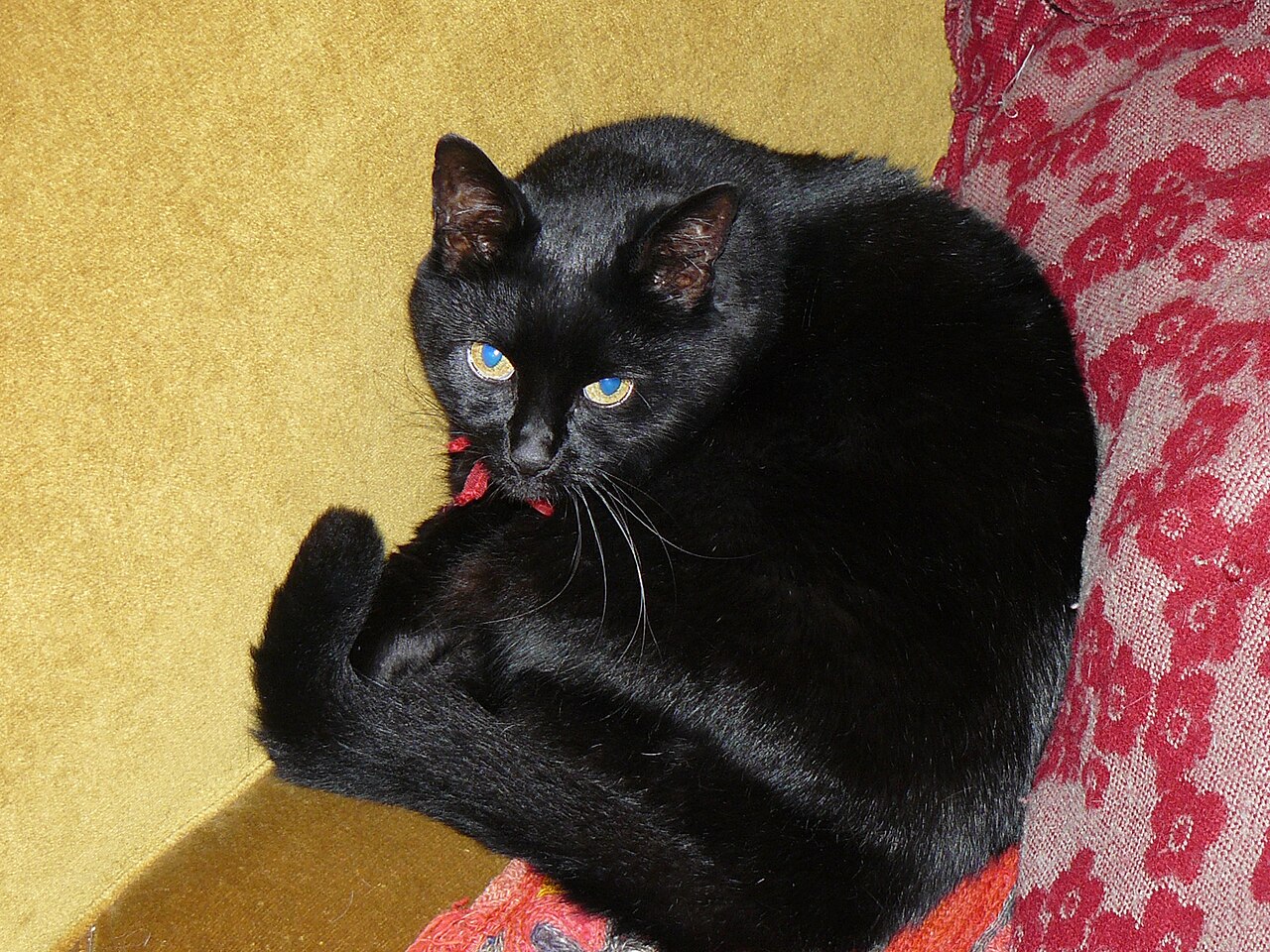
Illustrative observation photo; it does not show a confirmed diagnosis. Photo: Black cat curled up on a sofa in Newcastle upon Tyne, UK.jpg by Salwa Farwaneh Dameh — CC0. Unmodified.
Who This Page Is For
Reduced appetite
Vomiting or weight loss
Weakness
These changes recurring or progressing after an earlier veterinary assessment
Who This Page Is Not For
a previously assessed stable laboratory or hormonal finding with no new symptoms and a specific veterinary recheck plan
If you are unsure whether this is significant, that uncertainty itself warrants veterinary assessment.
Related Urgent Symptoms
What This Can Look Like at Home
Clinical presentation often involves changes in ordinary behaviour or daily routines. Owners may notice:
Reduced appetite
Vomiting or weight loss
Weakness
Why This Can Be Hard to Judge
Rarity does not exclude it, but canine assumptions and electrolyte patterns cannot establish a feline diagnosis. Selected adrenal testing is interpreted with clinical and laboratory findings.
Early misleading normalcy means a pet may eat, greet you or have a quiet interval while a problem remains. The pattern and combination of findings matter more than one reassuring moment.
Differential diagnosis requires the history, examination and appropriately selected tests; an online description or photograph cannot reliably supply those answers.
The Improvement Trap
Temporary improvement does not equal resolution.
A brighter interval does not establish adequate adrenal function or exclude a crisis.
Report the improvement and any recurring signs to the veterinarian. A new red flag overrides an earlier reassuring interval; keep the advised assessment or recheck.
What Is Easy to Miss at Home
Recurring unexplained illness
Dehydration despite drinking
Collapse or marked weakness
New weakness or altered awareness
The complete medication, supplement and exposure history
These details help the veterinarian assess the whole pet and the urgency; they do not confirm or exclude a diagnosis on their own.
When This Can Be an Emergency
Triage evaluation is critical when the main change occurs with pain, impaired normal function or systemic illness. Use the highest-priority category that applies:
Now — collapse, seizures, marked disorientation, inability to stand, laboured breathing, or repeated urinary straining with little or no urine. Seek immediate assessment; if SKVH cannot receive your pet promptly, contact an open emergency hospital.
Today — new weakness, trembling, repeated vomiting, poor intake or an unexpected clinically important laboratory result: call now for triage.
Timing limit — a currently well pet with a new abnormal result should follow the ordering veterinarian’s stated timing; call within the next working day if no plan has been given.
Progressing signs — worsening frequency, discomfort or interference with daily activity needs earlier advice rather than waiting for the original appointment.
Compounding signs — reduced appetite, repeated vomiting or unusual weakness alongside the main problem raises the priority; call the same day.
Systemic red flags — breathing difficulty, collapse, very pale gums or reduced responsiveness require immediate assessment, whatever the suspected cause.
How Veterinarians Assess This
Clinical signs alone cannot reliably determine severity.
Symptoms can appear similar while representing very different internal disease processes. Diagnostic testing is how veterinarians determine whether a condition is mild and self-limiting or serious and potentially life-threatening, and how they guide appropriate care.
Additional disease-specific testing (such as selected adrenal hormone investigation including ACTH stimulation testing when indicated; feline results require species-specific interpretation) may be considered based on the overall clinical picture.
These links lead to the diagnostics overview. Tests are selected after assessment; not every pet needs every test. Availability, anaesthesia and referral are discussed where relevant rather than assumed.
Veterinary Differentials - Serious / Must-Rule-Out First
These are not diagnoses. Diagnostic testing determines which conditions apply.
These possibilities concern overlapping clinical signs or accompanying illness. They are not equally likely; age, species, reproductive status and examination findings determine relevance. A confirmed condition does not automatically require testing for every listed alternative.
Diabetic ketoacidosis: a diabetic metabolic complication involving ketones and acid-base disturbance.
Tests may include Blood glucose, Blood ketones, Blood gas analysis.
Acute kidney injury: a sudden reduction in kidney function.
Tests may include Blood chemistry panel, Urinalysis.
Hypoadrenocorticism: insufficient adrenal hormone production that can cause weakness and metabolic disturbance.
Tests may include Blood chemistry panel, ACTH stimulation test.
Acute liver failure: a sudden loss of important liver functions.
Tests may include Blood chemistry panel, Coagulation profile.
Insulinoma: an insulin-secreting tumour that can cause inappropriate low blood glucose.
Tests may include Blood glucose, Abdominal ultrasound.
Veterinary Differentials - Common / More Typical
These include more typical explanations and other alternatives for overlapping signs. Some apply mainly to one species or life stage, and more than one process can coexist.
Diabetes mellitus in dogs: persistent inadequate glucose regulation in a dog.
Tests may include Blood glucose, Urinalysis, Fructosamine.
Diabetes mellitus in cats: persistent inadequate glucose regulation in a cat.
Tests may include Blood glucose, Urine glucose testing, Fructosamine.
Hyperthyroidism in cats: overproduction of thyroid hormone.
Tests may include Total T4, Free T4, Blood chemistry panel.
Hypothyroidism in dogs: inadequate thyroid hormone production.
Tests may include Total T4, Free T4, Canine TSH.
Dehydration: a body-water deficit that may contribute to harder stool.
Tests may include Physical examination, Blood chemistry panel.
Inadequate calorie intake: less food being consumed or available than the pet needs.
Tests may include Complete blood count, Blood chemistry panel.
Safety, Psychology, & Peace of Mind
You do not need to identify the disease before asking for triage. A clear account of what changed, when it began and how the pet is behaving helps the team advise the next step.
Rarity does not exclude it, but canine assumptions and electrolyte patterns cannot establish a feline diagnosis. Selected adrenal testing is interpreted with clinical and laboratory findings.
Use the timing and red flags above rather than relying on a single improvement. Call earlier if comfort, appetite, activity, urine output or breathing deteriorates.
Prognosis depends heavily on the underlying cause, severity and examination findings. Ask which tests answer the immediate question, which decisions can be staged and what follow-up is appropriate.
For urgent concerns, call rather than waiting for a message reply.
Same-Day Urgent Care at Stittsville Kanata Vet Hospital — option 1
Call for Bookings & Non-Urgent Questions — option 2
Text Us: 343-463-8787 for routine questions and bookings. Immediate red flags require a call and prompt assessment; if SKVH is closed or cannot receive your pet promptly, contact an open emergency hospital.
Frequently Asked Questions
When should addison's disease in cats be assessed urgently?
For addison's disease in cats, seek same-day advice for new weakness, trembling, repeated vomiting, poor intake or an unexpected clinically important laboratory result. Immediate red flags include collapse, seizures, marked disorientation, inability to stand, laboured breathing, or repeated urinary straining with little or no urine. Call using the highest-priority category above.
Can a pet seem well despite addison's disease in cats?
Signs associated with addison's disease in cats can be subtle or intermittent, so a normal-looking interval does not rule out a problem. Rarity does not exclude it, but canine assumptions and electrolyte patterns cannot establish a feline diagnosis. Arrange assessment for persistent or recurring changes, sooner for the red flags above.
Does improvement rule out addison's disease in cats?
Improvement in signs associated with addison's disease in cats does not establish resolution. A brighter interval does not establish adequate adrenal function or exclude a crisis.. Keep the advised assessment or recheck, and call sooner if signs recur or worsen.
Why are tests considered for addison's disease in cats?
Assessing addison's disease in cats requires more than outward signs alone. The veterinarian may consider physical examination, blood chemistry panel or urinalysis, based on the examination. Ask which tests fit your pet and how the results guide care.
What should I do next about addison's disease in cats?
For possible addison's disease in cats, veterinary triage is the next step based on the signs and timing above. Call option 1 for urgent concerns or option 2 for a stable booking question. Immediate red flags need prompt assessment rather than waiting for a text reply.