Need a veterinarian today?
or
Urgent care is for pets who are unwell, in discomfort, are in urgent situation or are not acting like themselves and should be assessed within 24 hours.
Can wait 24-48 hours?
Wellness, routine, or general care is for pets needing vaccines, preventive care, or ongoing monitoring who can safely wait at least 24 hours.
This page focuses on urgent assessment. Routine wellness exams, preventive care, and monitoring of stable conditions are provided through scheduled general wellness appointments.
Cat Peeing Outside the Litter Box – Could It Be Medical? (Causes, Warning Signs, and Urgent Care)
A cat suddenly peeing outside the litter box — sometimes described as inappropriate urination, litter box accidents, or urinating around the house — can range from behavioral stress to a sign of serious medical disease affecting the urinary tract, kidneys, hormones, or nervous system.
Although some cases involve litter box preferences or stress-related behaviors, sudden urination outside the litter box may also indicate bladder inflammation, infection, urinary obstruction risk, or metabolic illness that may require urgent care assessment.
Because many medical conditions can produce this behavior, veterinary examination and diagnostic testing are often necessary to determine whether the cause is behavioral, urinary, metabolic, or neurologic.
Definition
Cat peeing outside the litter box refers to urination occurring in locations other than the designated litter box.
Veterinarians often classify this behavior as periuria, meaning urination outside the appropriate elimination site.
This behavior can arise from two broad categories:
• medical causes affecting the urinary or systemic systems
• behavioral or environmental factors
Cats may urinate outside the litter box due to:
• urinary tract pain
• increased urine production
• difficulty accessing the litter box
• stress or environmental changes
• neurologic disorders affecting bladder control
Veterinary clinics in Ottawa, Kanata, and Stittsville frequently evaluate cats whose first sign of urinary disease is urinating outside the litter box.
Male cats are at significantly higher risk for serious urinary tract disease that can lead to life-threatening urinary obstruction.
Because male cats have a longer and narrower urethra, inflammation or crystals in the bladder can block urine flow more easily.
Male cats that begin urinating outside the litter box should be monitored closely for signs of straining, frequent attempts to urinate, or producing little urine.
These signs may indicate urinary obstruction, which requires urgent veterinary care.
➡ See also: Male Cat Straining to Urinate or Not Peeing or Peeing in Drops
Observations About Coat Color (Anecdotal)
Veterinarians and veterinary staff sometimes notice patterns among cats presenting with recurrent urinary issues.
Male cats are overrepresented among patients with urinary obstruction and bladder inflammation.
Clinically, some veterinarians report seeing orange, grey, and black male cats frequently among patients with recurrent urinary problems.
This observation is anecdotal and not a proven scientific association, but it highlights an important point:
Any male cat — regardless of coat color — that develops urinary symptoms should be evaluated promptly.
Some cats may experience repeated urinary episodes even when litter box care, diet, and hydration are well managed.
Who This Page Is For
This page is for cat owners noticing signs such as:
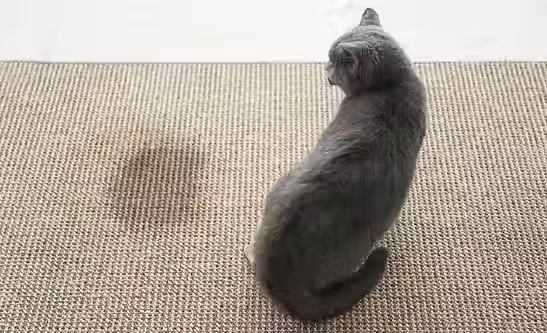
• urinating on floors, carpets, or furniture
• urinating beside the litter box
• small urine spots around the house
• sudden change in litter box habits
• frequent trips to the litter box
• vocalizing during urination
Who This Page Is Not For
• Cats that spray small amounts of urine vertically for territorial marking.
If urination outside the litter box begins suddenly or occurs repeatedly, veterinary assessment helps determine whether medical disease may be present.
Related Urgent Symptoms
• Male Cat Straining to Urinate or Not Peeing or Peeing in Drops
• Cat Not Eating – Is This an Emergency?
• Cat Lethargic and Weak – When to Seek Emergency Care
• Dog or Cat Suddenly Weak, Lethargic, or Collapsing
• Dog or Cat Poisoned or Exposed to Toxins
• Dog or Cat Vomiting and Diarrhea at the Same Time
• Dog or Cat Having a Seizure or Convulsions
• Pale Gums in Dogs or Cats (Emergency Sign)
What This Can Look Like at Home
Cats experiencing litter box problems may show several observable behaviors.
Common observations include:
• urinating beside the litter box
• urinating on beds or clothing
• frequent small urinations around the house
• repeated trips to the litter box
• crying or vocalizing during urination
• licking the genital area frequently
Some cats may also show reduced appetite, hiding behavior, or decreased activity.
Why This Can Be Hard to Judge
Urination outside the litter box can occur with both behavioral and medical causes.
For example:
• stress or litter box preferences may cause behavioral periuria
• bladder inflammation may cause painful urination
• metabolic disease may increase urine production
• neurologic disease may affect bladder control
Because these conditions can produce similar behavior, veterinary evaluation is often necessary to determine the underlying cause.
The Improvement Trap
Urination behavior may fluctuate even when the underlying disease remains present.
For example:
• bladder inflammation may come and go
• metabolic disease may worsen gradually
• behavioral stress may vary with environment
Temporary improvement does not necessarily mean the underlying cause has resolved.
What Is Easy to Miss at Home
Subtle signs may accompany litter box accidents.
These may include:
• increased thirst
• frequent urination
• straining in the litter box
• genital grooming
• reduced appetite
These signs may indicate urinary tract disease or systemic illness even if the cat otherwise appears stable.
When This Can Be an Emergency
Urgent care assessment is recommended if any of the following occur:
• repeated attempts to urinate with little or no urine produced
• straining in the litter box
• vocalizing during urination
• lethargy or weakness
• vomiting
• blood in the urine
Cat peeing outside the litter box is not always an emergency, but urination accompanied by straining, pain, or weakness should be assessed urgently.
How Veterinarians Assess This
Clinical signs alone cannot reliably determine severity.
Urination outside the litter box may be associated with urinary tract disease, metabolic disease, behavioral disorders, or neurologic problems.
Veterinarians may consider diagnostic testing such as:
• Urinalysis — evaluate infection, crystals, and bladder inflammation
• Urine culture — detect bacterial infection
• Blood tests — assess kidney function, glucose levels, and metabolic disease
• X-rays or ultrasound — evaluate bladder stones or structural abnormalities
• Endocrine testing — evaluate hormonal disorders affecting urination
Diagnostic testing helps determine whether inappropriate urination is caused by behavioral factors or underlying medical disease.
Veterinary Differentials - Serious / Must-Rule-Out First
Urethral obstruction risk (especially in male cats)
Inflammation, crystals, or stones can block urine flow and become life-threatening.
Tests may include urinalysis, imaging, blood tests.
Urolithiasis (bladder stones)
Mineral stones within the urinary tract causing pain and abnormal urination.
Tests may include X-rays, ultrasound, urinalysis.
Pyelonephritis (kidney infection)
Bacterial infection affecting the kidneys causing systemic illness.
Tests may include blood tests, urine culture, ultrasound.
Diabetes mellitus
Endocrine disease causing excessive thirst and urination.
Tests may include blood glucose testing and urinalysis.
Urinary tract neoplasia
Tumors affecting the bladder or urethra causing urinary changes.
Tests may include imaging, cytology, biopsy.
Veterinary Differentials - Common / More Typical
Feline Lower Urinary Tract Disease (FLUTD)
Inflammation of the bladder causing painful urination and litter box avoidance.
Tests may include urinalysis and imaging.
Urinary tract infection
Bacterial infection causing discomfort and frequent urination.
Tests may include urinalysis and urine culture.
Interstitial cystitis
Stress-related bladder inflammation causing recurrent urinary signs.
Tests may include urinalysis and imaging.
Behavioral periuria
Stress, litter box aversion, or environmental changes affecting elimination behavior.
Tests may include behavioral assessment once medical disease is ruled out.
Arthritis or mobility pain
Painful movement making entry into the litter box difficult.
Tests may include physical examination and imaging.
Safety, Psychology, & Peace of Mind
Changes in litter box behavior are one of the most common early warning signs of illness in cats.
Some cases involve stress or litter box preference, while others involve urinary tract disease, metabolic illness, or bladder inflammation.
Veterinary assessment helps determine whether the behavior is behavioral or medical.
Early evaluation can help identify urinary disease before it becomes severe.
Frequently Asked Questions
Is a cat peeing outside the litter box always behavioral?
Cat peeing outside the litter box is not always behavioral and may indicate urinary tract disease or systemic illness.
Conditions such as bladder inflammation, urinary infection, diabetes, or kidney disease may cause inappropriate urination. Veterinary assessment helps determine whether the cause is behavioral or medical.
Why would my cat suddenly start peeing outside the litter box?
Cat peeing outside the litter box may occur due to urinary tract pain, metabolic illness, stress, or litter box aversion.
Painful urination or increased urine production may lead cats to avoid the litter box. Veterinary evaluation helps determine the underlying cause.
Are male cats more at risk for serious urinary problems?
Male cats are more prone to life-threatening urinary obstruction due to their narrower urethra.
Inflammation or crystals can block urine flow, which can quickly become dangerous. Veterinary assessment helps determine whether urinary symptoms require urgent care.
Why do veterinarians recommend tests for litter box accidents?
Different diseases affecting the bladder, kidneys, and metabolism can produce similar urination behavior.
Diagnostic tests such as urinalysis, blood tests, and imaging help determine whether the cause is infection, bladder inflammation, metabolic disease, or behavioral.
What should I do if my cat suddenly pees outside the litter box?
If a cat suddenly begins urinating outside the litter box, veterinary assessment is recommended.
Urination accompanied by straining, lethargy, vomiting, or blood in the urine should be evaluated urgently.