Need a veterinarian today?
or
Urgent care is for pets who are unwell, in discomfort, are in urgent situation or are not acting like themselves and should be assessed within 24 hours.
Can wait 24-48 hours?
Wellness, routine, or general care is for pets needing vaccines, preventive care, or ongoing monitoring who can safely wait at least 24 hours.
Urgent and ongoing care in Stittsville, Kanata & West Ottawa. Unwell today? Call 343-463-8787, option 1 during clinic hours or check wait times. Stable bookings: option 2. One-off urgent visits welcome.
Cruciate Ligament Injury in Dogs — When to See a Vet: Causes, Warning Signs and Urgent Care
Cruciate Ligament Injury in Dogs (cranial cruciate ligament damage or a CCL tear) can cause intermittent limping or sudden inability to bear weight; trauma and other joint disease can look similar.
Definition
Cranial cruciate ligament disease affects an important stabilizer of a dog’s knee, or stifle. The ligament may be partly or completely torn. Dogs may become lame suddenly even when degeneration developed before the obvious episode. The signs described here are clinical observations; they cannot establish this diagnosis without veterinary assessment.
This page focuses on dogs. Cats can also sustain cruciate ligament injury, but a lame cat needs species-specific assessment rather than an assumed canine knee problem.
For pet owners in Stittsville, Kanata, and nearby Ottawa communities, urgent-care assessment starts with the same clinical question used more widely: which findings explain the change, and how quickly does this pet need care?
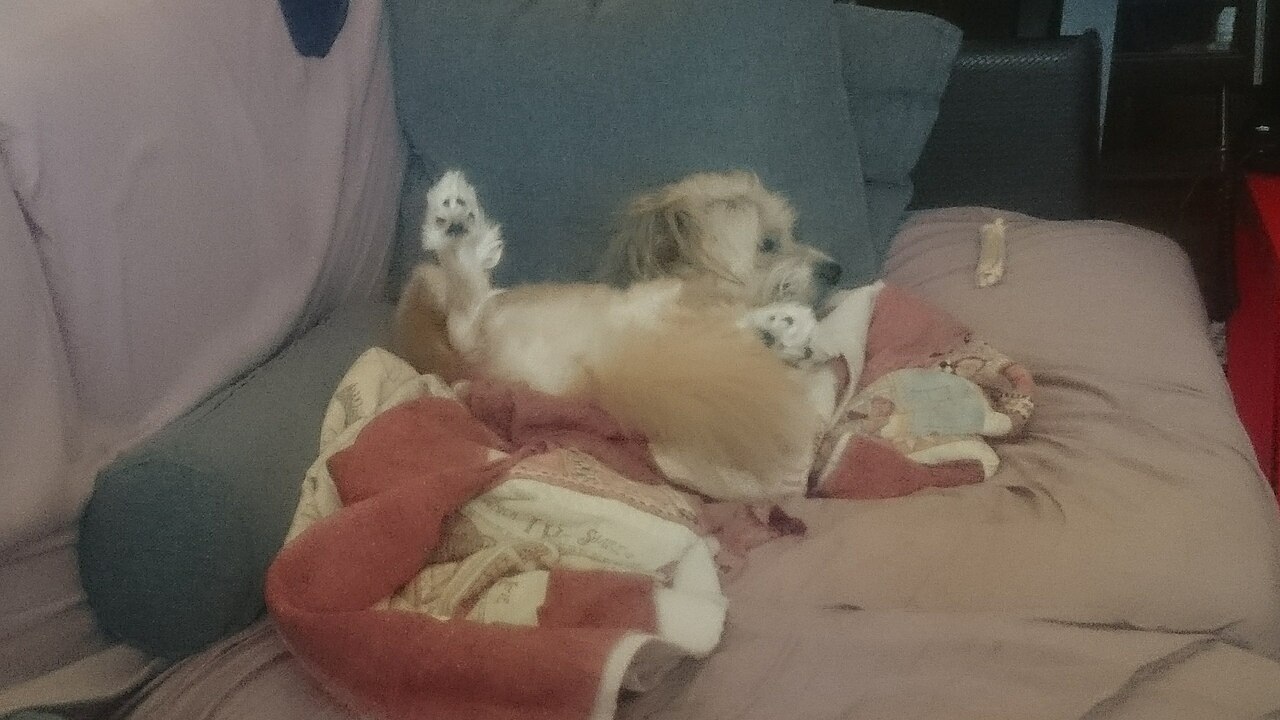
Illustrative observation photo; it does not show a confirmed diagnosis. Photo: Dog lying on sofa.jpg by Whiskydo — CC BY-SA 4.0. Unmodified.
Who This Page Is For
Sudden or recurring hind-leg lameness
Difficulty rising, sitting squarely, or using stairs
Reduced weight bearing after exercise or rest
A return or progression of these changes after an earlier veterinary assessment
Who This Page Is Not For
A brief awkward step followed immediately by completely normal comfortable walking, without recurrence; sustained or returning lameness needs assessment.
If you are unsure whether this is significant, that uncertainty itself warrants veterinary assessment.
Related Urgent Symptoms
Health topics › Mobility, joints and pain
Continue with the question you need answered next.
Symptoms and warning signs
Conditions and findings
Follow-up and recovery
See all mobility, joints and pain guides · Complete A–Z directory
What This Can Look Like at Home
Clinical presentation often involves changes in everyday behaviour rather than an obvious diagnosis. Owners may notice:
Sudden or recurring hind-leg lameness
Difficulty rising, sitting squarely, or using stairs
Reduced weight bearing after exercise or rest
Why This Can Be Hard to Judge
A hind-leg limp may come from the knee, hip, paw, back, or another structure. A video and the history help, but an orthopaedic examination is needed to localize the problem.
Early misleading normalcy means that an apparently ordinary meal, walk, or quiet period can coexist with a developing problem. The trend, the combination of signs, and the examination matter more than one reassuring moment.
Differential diagnosis requires matching the history and physical findings with appropriate tests; an online description or photograph cannot do that reliably.
The Improvement Trap
Temporary improvement does not equal resolution.
Rest may improve comfort without restoring normal knee stability. A return to running before assessment can aggravate pain. Improvement should inform the plan, not be treated as proof that the ligament is intact.
A quieter interval is useful information for the veterinarian, but worsening pain, reduced appetite, or any red flag overrides an earlier period of improvement. Keep the advised recheck even if the visible signs settle.
What Is Easy to Miss at Home
A subtle change in sitting posture
A meniscal injury contributing to pain
Disease affecting the opposite knee or another joint
Difficulty rising, sitting squarely, or using stairs
Reduced use of the leg even when the limp seems milder
These clues help a veterinarian judge the whole pet and choose the next step; none confirms or excludes a diagnosis on its own.
When This Can Be an Emergency
Triage evaluation is critical when the main sign occurs with pain, loss of normal function, or whole-body illness. Use the highest-priority category that applies:
Now — major trauma, a visibly deformed limb, inability to stand, collapse, or sudden limb weakness that may be neurologic. Seek immediate assessment; if SKVH cannot receive your pet promptly, contact an open emergency hospital.
Today — inability to bear weight, marked pain, a swollen joint, feverish behaviour, or lameness with reduced appetite.
Appointment or monitoring limit — a mild limp in an otherwise comfortable pet: call if it persists into the next day, recurs, or worsens; do not wait overnight for severe pain or non-weight-bearing lameness.
Escalating signs — a problem that becomes more frequent, painful, or disruptive after seeming mild needs earlier advice rather than waiting for the original appointment.
Compounding signs — loss of appetite, repeated vomiting, or unusual weakness alongside the main change raises the priority; call the same day.
Systemic red flags — breathing difficulty, collapse, very pale gums, or inability to respond normally require immediate assessment, whatever the suspected cause.
How Veterinarians Assess This
Clinical signs alone cannot reliably determine severity.
Symptoms can appear similar while representing very different internal disease processes. Diagnostic testing is how veterinarians determine whether a condition is mild and self-limiting or serious and potentially life-threatening, and how they guide appropriate care.
Additional disease-specific testing (such as joint-fluid culture or advanced imaging when the examination suggests infection or a different structural problem) may be considered based on the overall clinical picture.
The links above lead to the hospital’s diagnostics overview. The veterinarian selects tests after examination; availability, anaesthesia needs, and referral are discussed where relevant. Not every pet needs every test.
Veterinary Differentials - Serious / Must-Rule-Out First
These are not diagnoses. Diagnostic testing determines which conditions apply.
The following are possibilities when the examination and accompanying signs support them. They are not equally likely in every pet, and systemic causes are considered when there are systemic findings.
Fracture or joint displacement: a broken bone or loss of normal joint alignment.
Tests may include Limb X-rays, Orthopaedic examination.
Septic arthritis: infection within a joint.
Tests may include Joint-fluid cytology, Joint-fluid culture, Limb X-rays.
Osteomyelitis: infection involving bone.
Tests may include Limb X-rays, Bacterial culture, Biopsy.
Osteosarcoma: a malignant bone tumour.
Tests may include Limb X-rays, Biopsy, Chest X-rays.
Neurologic disease affecting the limb: a nerve or spinal problem causing weakness or altered movement.
Tests may include Neurologic examination, MRI imaging.
Veterinary Differentials - Common / More Typical
These include more typical explanations and other alternatives for overlapping signs. Age, sex, reproductive status, species, and examination findings determine relevance; inclusion does not mean each is common in every patient.
Cruciate ligament disease: partial or complete injury to a stabilizing knee ligament.
Tests may include Stifle stability examination, Limb X-rays.
Meniscal injury: injury to the cushioning cartilage within the knee.
Tests may include Orthopaedic examination, Joint imaging.
Osteoarthritis: joint degeneration associated with pain and stiffness.
Tests may include Orthopaedic examination, Limb X-rays.
Patellar luxation: movement of the kneecap out of its normal groove.
Tests may include Orthopaedic examination, Limb X-rays.
Muscle strain or soft-tissue injury: damage to muscles or nearby supporting tissues.
Tests may include Orthopaedic examination, Limb X-rays.
Safety, Psychology, & Peace of Mind
Uncertainty is a reason to ask for triage, not a requirement to identify the disease yourself. A short account of what changed and when helps the clinical team decide how soon the pet should be seen.
A normal-looking interval can make timing difficult. Use the red flags and the assessment timeframe above, and call sooner if pain, appetite, activity, urine output, or breathing worsens.
Prognosis depends heavily on the underlying cause, severity, and examination findings. Assessment can narrow that uncertainty without assuming every pet has the most serious possibility.
Ask the veterinarian which tests answer the immediate question, what can be staged, and what follow-up is needed. Care options, practical constraints, and referral can be discussed after the pet’s needs are assessed.
Same-Day Urgent Care at Stittsville Kanata Vet Hospital — call option 1
Call for Bookings & Non-Urgent Questions — option 2
Text Us: 343-463-8787 for routine questions and bookings
For immediate red flags, call rather than waiting for a text reply. If SKVH is closed or cannot assess your pet promptly, contact an open emergency hospital.
Where to go next
- Iliopsoas Injury in Dogs and Cats
- Returning a Dog to Activity After an Injury
- Dog Limping – When to See a Vet (Causes, Injury Signs, and Urgent Care)
Frequently Asked Questions
When should cruciate ligament injury in dogs be assessed urgently?
For cruciate ligament injury in dogs, seek same-day assessment for inability to bear weight, marked pain, a swollen joint, feverish behaviour, or lameness with reduced appetite. Immediate red flags include major trauma, a visibly deformed limb, inability to stand, collapse, or sudden limb weakness that may be neurologic. Call for triage using the highest-priority category above.
Can a pet seem well despite cruciate ligament injury in dogs?
Signs associated with cruciate ligament injury in dogs can be intermittent or subtle, so a normal-looking interval does not rule out a problem. A hind-leg limp may come from the knee, hip, paw, back, or another structure. Arrange assessment for persistent or recurring changes, sooner for the red flags above.
Does improvement rule out cruciate ligament injury in dogs?
Improvement in signs associated with cruciate ligament injury in dogs does not establish that the underlying problem has resolved. Rest may improve comfort without restoring normal knee stability. Keep the advised assessment or recheck, and call sooner if signs return or worsen.
Why are tests considered for cruciate ligament injury in dogs?
Assessing cruciate ligament injury in dogs requires more than outward signs alone. Veterinarians may consider orthopaedic examination, stifle stability testing or joint x-rays, depending on the examination. Ask which tests are needed for your pet and how the results will guide the next step.
What should I do next about cruciate ligament injury in dogs?
For possible cruciate ligament injury in dogs, the next step is veterinary triage based on current signs and the timing above. Call SKVH on option 1 for urgent concerns or option 2 for a stable booking question. For immediate red flags, seek an open receiving facility promptly rather than waiting for a message reply.