Need a veterinarian today?
or
Urgent care is for pets who are unwell, in discomfort, are in urgent situation or are not acting like themselves and should be assessed within 24 hours.
Can wait 24-48 hours?
Wellness, routine, or general care is for pets needing vaccines, preventive care, or ongoing monitoring who can safely wait at least 24 hours.
This page focuses on urgent assessment. Routine wellness exams, preventive care, and monitoring of stable conditions are provided through scheduled general wellness appointments.
Female Cat Not Peeing – When to See a Vet: Causes, Warning Signs, and Urgent Care
A female cat that is not peeing or is straining to urinate (dysuria or stranguria) may be experiencing anything from a painful bladder inflammation to a life-threatening metabolic crisis.
Definition
Veterinarians use terms like dysuria (painful urination) or pollakiuria (frequently passing tiny amounts of urine) to describe the clinical signs of a cat that appears unable to pee. These are clinical signs of distress and discomfort, not a final diagnosis.
While male cats are more prone to total urethral blockage, a female cat not peeing is a common reason pets visit Stittsville Kanata Vet Hospital for urgent care; careful diagnostic evaluation is required to rule out critical underlying issues for pet owners in the Stittsville, Kanata, and greater Ottawa area.
Who This Page Is For
Female cats making frequent trips to the litter box with little to no result.
Cats crying, howling, or showing visible distress while attempting to urinate.
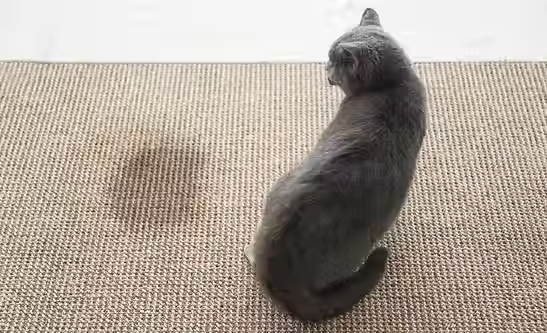
Pets found straining in unusual locations (sinks, bathtubs, or rugs) outside the litter box.
Owners who notice blood-tinged urine or a total absence of urine in the box for over 12 hours.
Who This Page Is Not For
A cat that is urinating normal volumes but perhaps doing so more frequently due to increased water intake.
If you are unsure whether this is significant, that uncertainty itself warrants veterinary assessment.
Related Urgent Symptoms
What This Can Look Like at Home
Clinical presentation often involves a cat that seems restless and hyper-focused on the litter box.
Spending several minutes in the "squat" position with only a drop of urine produced.
Excessive licking of the genital area after leaving the litter box.
"Periuria" or urinating in plain sight of the owner on cool surfaces like tile or laundry.
A rigid or "tucked up" posture when walking or resting.
Why This Can Be Hard to Judge
Early misleading normalcy often occurs because the cat may still be eating and acting normally between trips to the box. Owners frequently mistake straining to urinate for constipation or "difficulty pooping" because the posture is similar. Because inflammation can wax and wane, a cat may seem slightly better for a few hours before the discomfort returns with greater intensity.
The Improvement Trap
Temporary improvement does not equal resolution. A cat may successfully pass a small amount of urine after hours of straining, leading an owner to believe the issue has passed. However, the underlying cause—such as crystals, stones, or severe inflammation—often remains, and the risk of a total obstruction or worsening infection persists.
What Is Easy to Miss at Home
Subtle "grittiness" in the litter which may indicate crystals.
A firm, painful, or enlarged bladder when the belly is touched.
Dehydration signs, such as tacky gums or a loss of skin elasticity.
Behavioral shifts, like a social cat suddenly becoming reclusive or aggressive.
These clues often indicate that the urinary issue is affecting the cat's systemic health.
When This Can Be an Emergency
Immediate Urgent Care (Right Now)
Total inability to pass any urine for more than 12-24 hours.
Vomiting or extreme lethargy combined with straining.
A cat that is "flat out" or non-responsive.
Known ingestion of a toxin (like lilies) which can cause acute kidney shut-down.
Same-Day Urgent Care (Typically within 12–24 hours)
Visible blood in the urine (hematuria).
Passing only tiny, frequent droplets of urine.
Vocalizing or crying out in the litter box.
Straining following a recent stressful event (move, new pet, or houseguests).
Next Available (Typically within 24 hours)
A single episode of urinating outside the box with no other signs of distress.
Strong-smelling urine without visible blood or straining.
How Veterinarians Assess This
Clinical signs alone cannot reliably determine severity. Symptoms can appear similar while representing very different internal disease processes. Diagnostic testing is how veterinarians determine whether a condition is mild and self-limiting or serious and potentially life-threatening, and how they guide appropriate care.
Urinalysis: To check for crystals, bacteria, protein, and pH levels.
Urine Culture and Susceptibility: To identify specific bacteria and the correct antibiotic to treat them.
Abdominal Radiographs (X-rays): To look for bladder stones (uroliths) or kidney stones.
Abdominal Ultrasound: To evaluate the bladder wall thickness and look for "sludge" or small stones.
Serum Chemistry: To evaluate kidney values (BUN, Creatinine) and electrolytes (Potassium).
Additional disease-specific testing (such as blood pressure measurement or specialized kidney function tests) may be considered based on the overall clinical picture.
Veterinary Differentials - Serious / Must-Rule-Out First
Urethral Obstruction: A physical blockage of the urethra, often by stones, which prevents urine flow. Tests may include Serum Chemistry, Abdominal X-rays, and Ultrasound.
Acute Kidney Injury (AKI): A sudden loss of kidney function that can stop urine production entirely. Tests may include Serum Chemistry, Urinalysis, and Blood Pressure.
Bladder Rupture: A tear in the bladder wall, often due to trauma or extreme pressure, causing urine to leak into the belly. Tests may include Abdominocentesis, Ultrasound, and Contrast X-rays.
Pyometra: A severe uterine infection in unspayed females that can cause abdominal pain and mimic urinary signs. Tests may include Abdominal Ultrasound, CBC, and X-rays.
Uroabdomen: The accumulation of urine in the abdominal cavity following a urinary tract tear. Tests may include Fluid Creatinine comparison and Abdominal Ultrasound.
Veterinary Differentials - Common / More Typical
Feline Interstitial Cystitis (FIC): A stress-induced inflammation of the bladder wall without an infection. Tests may include Urinalysis and Abdominal Ultrasound.
Bacterial Cystitis (UTI): A common infection of the bladder causing pain and urgency. Tests may include Urinalysis and Urine Culture.
Urolithiasis (Bladder Stones): Mineral formations in the bladder that irritate the lining and can cause blockages. Tests may include Abdominal Radiographs and Ultrasound.
Crystalluria: The presence of microscopic crystals in the urine that cause intense irritation. Tests may include Urinalysis and microscopic sediment exam.
Neoplasia (Bladder Tumors): Abnormal growths in the bladder that can interfere with normal urination. Tests may include Ultrasound, Cytology, and Urinalysis.
Safety, Psychology, & Peace of Mind
Watching a pet struggle to perform a basic bodily function is incredibly stressful for any owner. Waiting too long can turn a manageable inflammatory episode into a critical metabolic emergency. Assessment reduces uncertainty and allows for the immediate implementation of pain relief. Our clinical team in Stittsville understands the stress of a female cat not peeing; providing an assessment here in Kanata ensures your pet receives same-day relief.
Frequently Asked Questions
Is a female cat not peeing as dangerous as a male cat?
While male cats are at much higher risk for a total physical blockage, a female cat not peeing is still a medical priority. If she is unable to void urine, waste products can build up in the blood, leading to heart arrhythmias or kidney failure. Immediate assessment is needed to determine if she is truly blocked or severely inflamed.
Can I give my cat anything for pain at home?
No, you should never give human pain medications like Tylenol or Advil to a cat, as these are highly toxic and can cause fatal liver or blood disorders. Veterinary assessment is required to prescribe safe, feline-specific anti-inflammatories or pain relievers. Providing the wrong medication can complicate their treatment and prognosis.
Could my cat just be constipated?
Cats often use the same straining posture for both urination and defecation, making it very hard to tell the difference at home. If you see your cat straining and the litter box is dry, assume it is a urinary issue until proven otherwise. A full bladder is a much more immediate threat to life than constipation.
Why is my cat suddenly peeing in the bathtub?
Cats often associate the litter box with the pain they feel when urinating, so they seek out new, "safer" places to go. Cool, smooth surfaces like tubs or sinks are common choices for cats with bladder inflammation. This is a cry for help rather than a behavioral "spite" issue and requires medical evaluation.
Will this go away on its own if it's just stress?
Even if the root cause is stress (like FIC), the pain and secondary inflammation can lead to serious complications or a secondary infection. Without medical intervention, the "itch-burn" cycle of the bladder wall continues to cause the cat significant suffering. Addressing the pain and inflammation urgently improves the long-term outcome.